



Photo by Richard Hurd
Metro Metrics February 2026

Metro Metrics is a monthly data snapshot that explores key economic indicators reflecting the health of the Madison metro economy.
American Community Survey Update
Last month, the U.S. Census Bureau released the 2024 edition of its five-year American Community Survey (ACS), with data covering the years 2020-2024. The survey is conducted every year with five-year results calculated over the course of five samples, making them more robust and reliable. This month’s edition of Metro Metrics examines key measures of the Madison Metro population as well as how they have changed over time.
A Younger Population
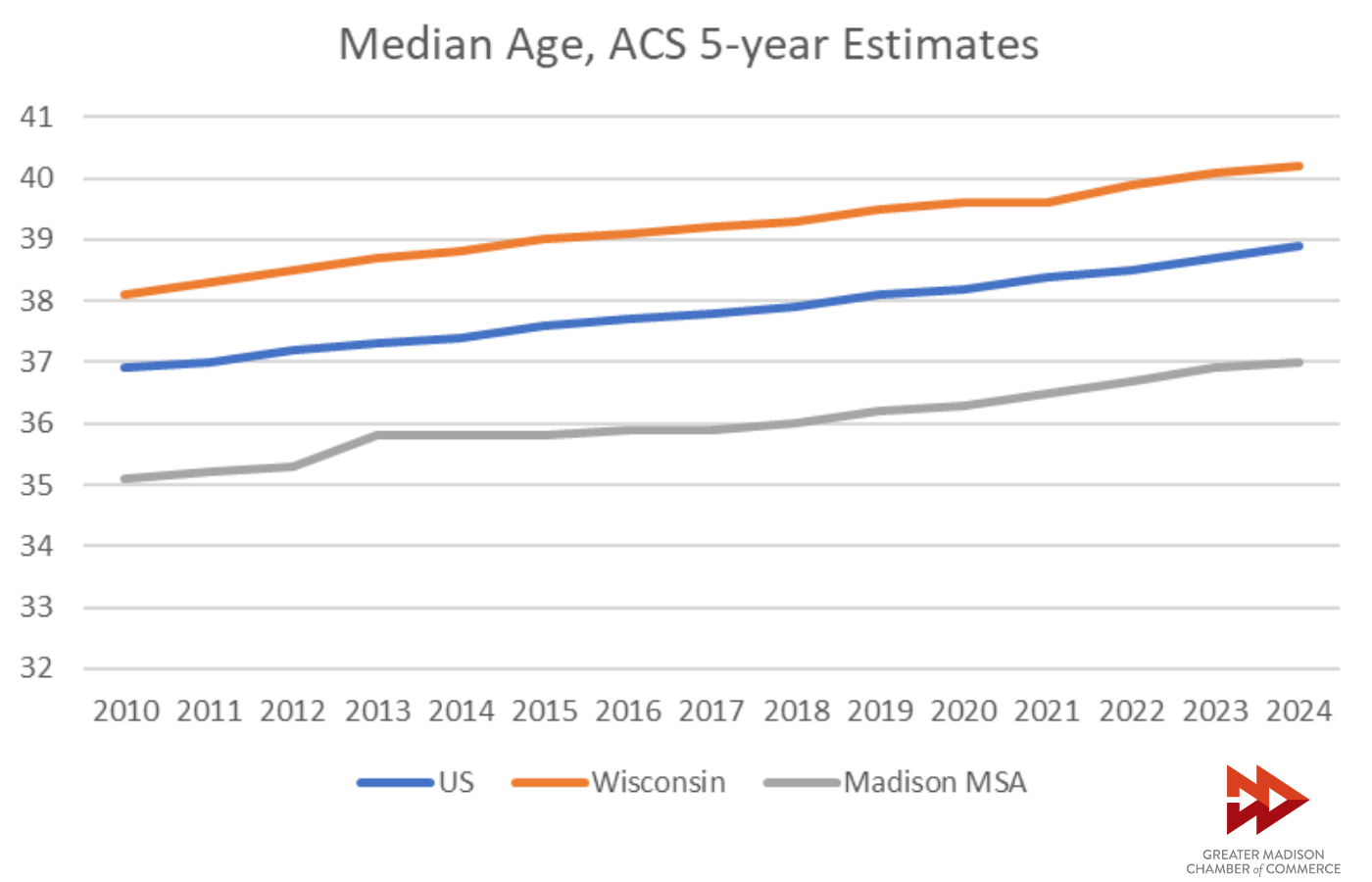
Over the past 15 years, the median age in the U.S. has increased from 36.9 to 38.9 years, while the median age in Wisconsin has increased from 38.1 to 40.2 years (Fig. 1). A greater proportion of people, especially in the Midwest, are over 65 years old and are leaving the workforce. While Greater Madison is facing the same challenges as Wisconsin and the U.S., the region is younger and less impacted by them.
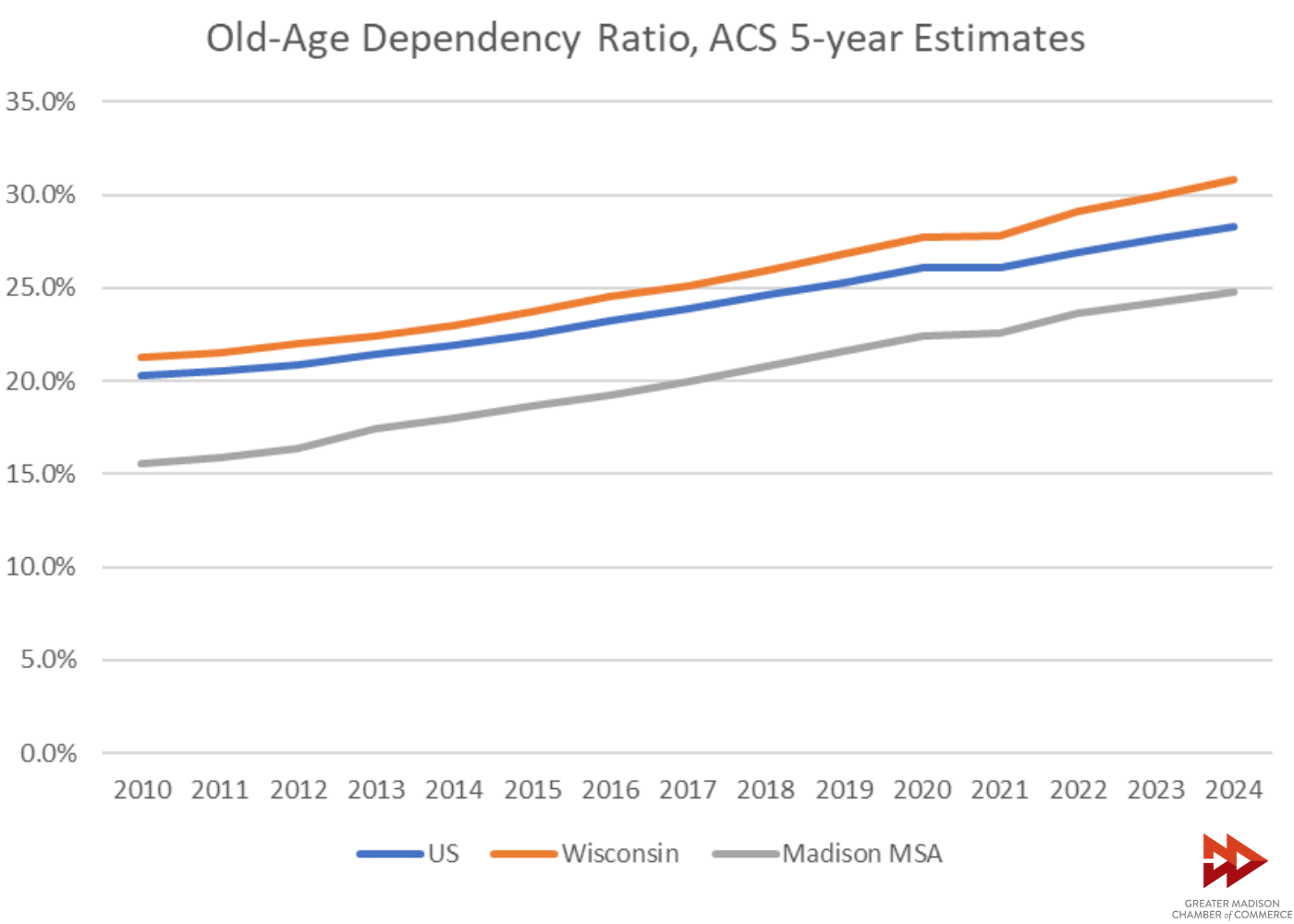
One way economists understand how an aging population impacts the economy is through a measure called the old-age dependency ratio (Fig. 2). This ratio represents the number of people in a population aged 65 years old and older divided by the working age population (15-64 years old). Wisconsin’s current old-age dependency ratio is 30.8%, meaning that for every one person at retirement age, there are about three people of working age. The Madison Metro’s ratio is 24.8%, meaning that for every one person of retirement age, there are about four people of working age.
Every measure of workforce age in the ACS shows that Greater Madison is younger than Wisconsin and the U.S., illustrating the region’s competitive positioning against aging workforce trends affecting the nation.
Labor Force Participation
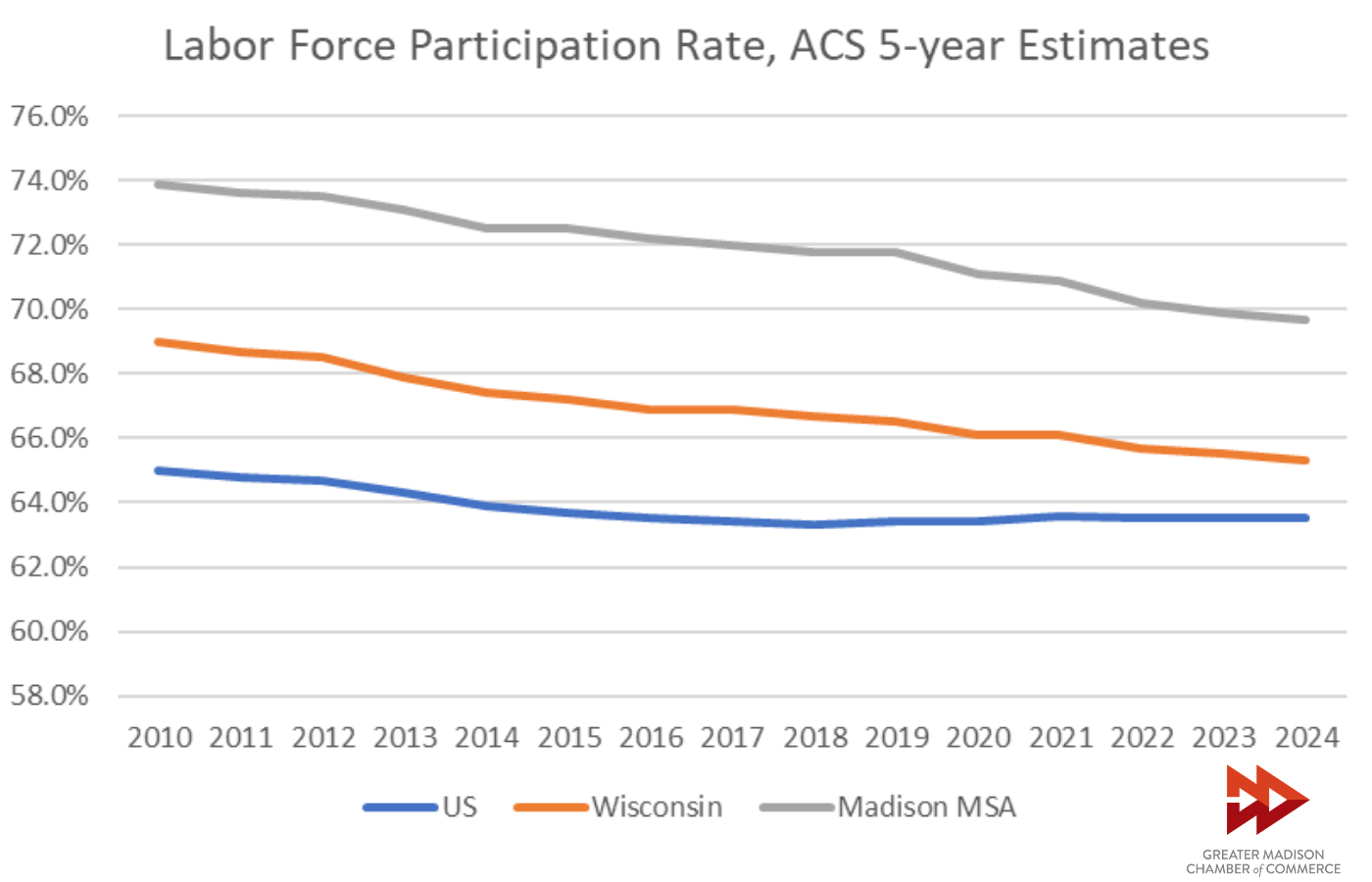
One consequence of an aging labor force is a decrease in the proportion of the population that is employed or looking for work, known as Labor Force Participation (Fig. 3). This rate tends to peak among people aged 25 to 54 and decrease outside that range. If a population has a lower share of people in these prime working years and a larger share of people outside of them, its labor force participation rate tends to decline. Labor force participation rates in Wisconsin have typically been above those of the nation’s, with the Madison Metro being above that mark. This trend has not changed in the 2024 ACS but the differences in rates have narrowed since 2010.
University-Educated Workforce
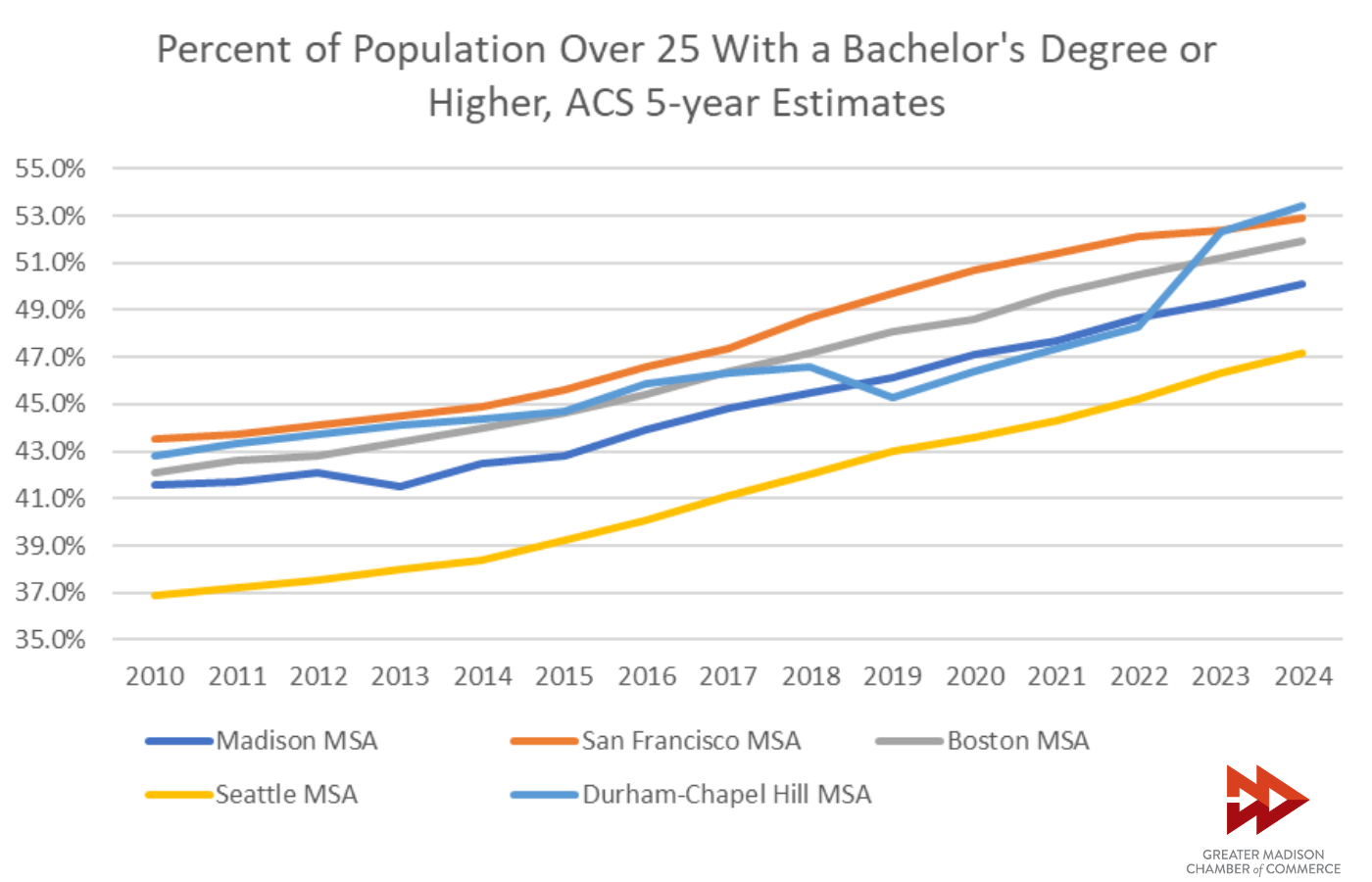
The 2024 ACS five-year estimates showed for the first time that a majority of people (50.1%) living in the Madison Metro aged 25 years old or older have a bachelor’s degree or higher (Fig. 4). This gives our metro the 28th highest proportion of university-educated adults out of the 935 total areas measured in the country, putting the region in the top 3%. This proportion of bachelor’s degree holders soars above Wisconsin’s (33.4%) and the country (35.7%) and is in the same league as leading high-tech regional economies such as San Francisco, Boston, Seattle and the Research Triangle.